
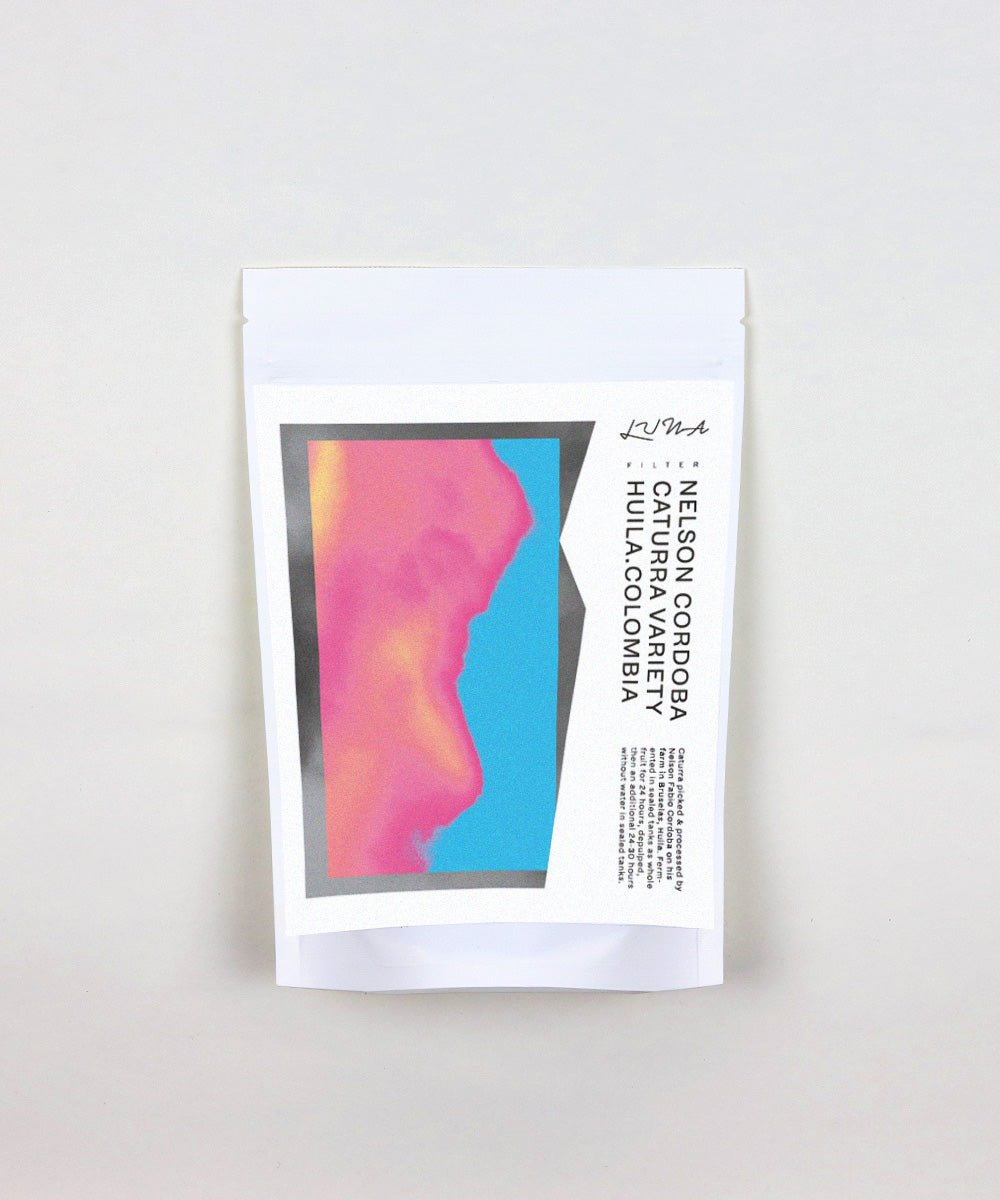
2025 (May) Colombia • Multi-Stage Washed
Nelson Fabio CordobaCaturra
vanilla • red berries • tropical • golden raisin
Caturra from Nelson Fabio Cordoba’s farm, Vegas del Chuscal, in Bruselas, Huila. Multi-stage processing. Nelson uses both whole-cherry and depulped coffee fermentations to develop a complex, fruit-forward cup that is delicate, with round vanilla bean and red berries, as well as more tropical notes & golden raisin on cooling.
Featured in our May 2025 Subscription alongside Los Guacharos Field Blend
- Variety:
- Caturra
- Location:
- Bruselas, Huila, Colombia
- Harvest:
- January 2025
- Processing:
- Multi-Stage Washed
- Cup Profile:
- complex, fruit-forward cup that is delicate, with round vanilla bean and red berries, as well as more tropical notes & golden raisin on cooling
Nelson Fabio Cordoba
Nelson is a member of Los Guácharos and is trained as a coffee cupper with the local National Training Service (SENA), and feels confident and proud of his coffee quality. His farm, Finca Vegas del Chuscal is named after a bamboo-like plant that’s native to the area. He also grows a variety of fruits, notably peaches and passion fruit, and he is diversifying his income streams with livestock as well. His future farm plans include building more canopy dryers with a polycarbonate roof that can withstand winds. He is also planning to focus on other crops on his farm to diversify his economic stability -probably more fruit trees. He says that he feels proud to be a coffee producer, and seeing that buyers have come to recognize and prefer his coffee gives him a lot of joy.
Caturra
A natural mutation of the bourbon variety, Caturra has a single-gene mutation that causes the plant to grow compact & small.
Processing
Nelson’s processing technique seems to promote a round vanilla and mixed berry profile. This is, in our opinion, a fun take on Caturra. His strategy leaves the cherries to ferment for 24 hours in sealed steel tanks. Then he depulps the seed in his eco-pulper, and leaves them to ferment in the sealed stainless steel tanks for 24-30 hours, giving beneficial microbes layers of opportunity to do their thing, and seems to result in supportive fruit forward complexity. From there, he takes the parchment back to the eco-pulper area where he washes it, and then dries it briefly on his patio before moving it to a large, covered canopy bed. It takes 15-30 days to fully dry the coffee in a slow, controlled way.