
Washed
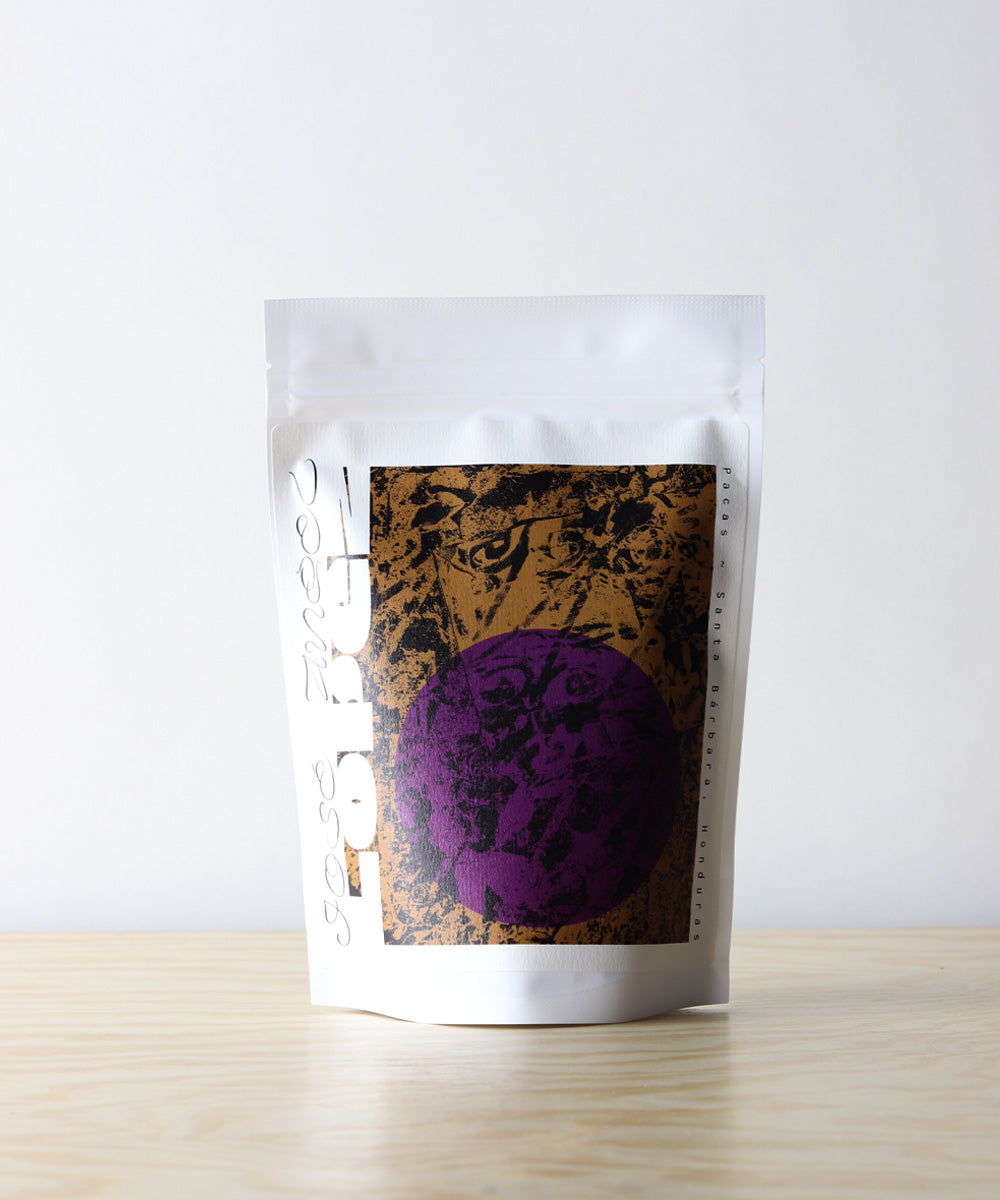
José Angel LopezPacas
pear • praline • herbal • jammy
This Pacas variety grown by José Angel Lopez in Santa Bárbara, Honduras reminds us of sweet pear praline and mixed berries - Exceptionally clean and balanced. This is José's third coffee harvest, and we're excited by the progress he has made since beginning to farm coffee for himself just a few years ago.
- Variety:
- Pacas
- Location:
- Santa Bárbara, Honduras
- Harvest:
- June 2021
- Processing:
- Washed
- Cup Profile:
- pear, praline, herbal complexity, jammy fruitiness
José Angel Lopez
Before working on his own farm, Jose was working as a picker with the notable Morales family in Los Andes, Santa Barbara. Jose has mainly Pacas variety but didn’t have any wet milling equipment or drying tables yet, so he borrowed from neighbours to get his coffee ready for delivery to the dry mill. That reliance on your community to get to the next step is critical, and something we can totally relate to. Once we received that first lot, I reached out to Benjamin to see if I could buy a depulper for Jose as thanks for the lovely coffee but also thinking ahead to next year’s harvest. With one hurdle out of the way perhaps Jose could find a spot on his property to process his lots. Benjamin actually happened to have a depulper hanging around on his farm that he wasn’t using, so the next time Jose was at the dry mill, the de-pulper was handed over.
Pacas
Jose Angel Lopez is farming Pacas (and a touch of Parainema) on a cool 1 hectare in the Piedras Amarillas area of Santa Barbara. That signature Santa Barbara weather is clockwork – cool mist enveloping the mountainsides of the national park reserve. This micro climate is thanks to close proximity to Lake Yojoa, introducing this cooling effect that is an incredible asset to growing varieties like Pacas slowly, allowing more time for nutrient uptake and slower maturation of the fruit.
Pacas is a natural mutation from Bourbon where it grows smaller and more compact allowing harvesting to be a little easier and planting to be closer together than would be possible with Bourbon, much like the Caturra variety grown widely in Colombia. Introduced to Honduran coffee farmers by IHCAFE in 1974, the variety was first discovered on a farm in the Santa Ana region of El Salvador, owned by the Pacas family, in 1949.
Processing
The cherry is harvested at its optimum maturity and depulped before being transferred to a fermentation tank for approximately 20 hours. After the fermentation the parchment is washed with water, shaking it vigorously with a wooden paddle. The washed parchment is then taken to a solar dryer that a neighbour lends to José where the coffee dries for approximately 14 days.