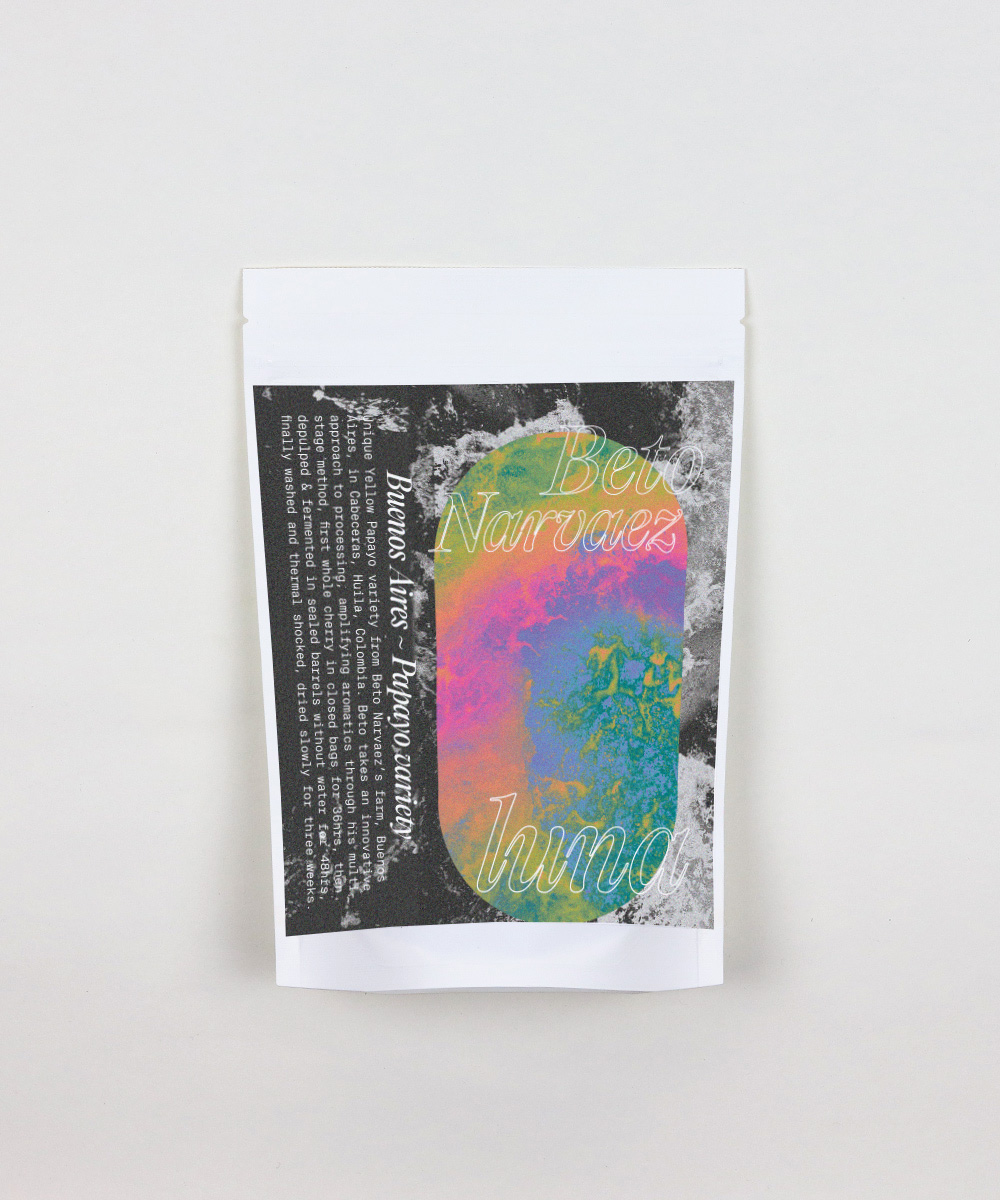
Beto Narvaez (Papayo) | Huila, Colombia
US$0.00
Producer: Beto Narvaez
Farm: Buenos Aires
Place: Bruselas, Huila, Colombia
Altitude: 1550-1600 masl
Variety: Papayo
Processing: Multi-Stage Washed
Importer: Shared Source
Harvest: November 2025
Cup profile: notably aromatic, distinctly tropical, with cup qualities that remind us of nectarous fruits like mangosteen & guava, floral honey, and baking spices in the finish.
Unique Yellow Papayo variety from Beto Narvaez’s farm, Buenos Aires, in Cabeceras, Huila, Colombia. Beto take an innovative approach to processing, amplifying aromatics through his multi-stage method, first whole cherry in closed bags for 36hrs., then depulped & fermented in sealed barrels without water for 48hrs., finally washed and thermal shocked, dried slowly for three weeks.
About Beto
When Beto started growing coffee as a teenager in Cabeceras, Huila with his mother a few decades ago, he caught the bug, eventually purchasing a farm from his uncle. For what he lacks in formal training, he’s more than made up for it in staying curious and continually learning about all aspects of coffee production, joining the Guacharos group four years ago. Winning 2nd place in the Yara Championship 2015, was yet more rocket fuel for Beto’s interest in coffee as craft. He has 2 plots, one 1.5 hectares and the other 4ha. In addition to Papayo, he has Pink Bourbon, Caturra, Sidra, Ombligón, F6, Cenicafe, and is continually seeking out variety diversity – He’s looking at Laurina, & maybe even Wush Wush for a 3rd plot he’s looking to buy when he gets financing sorted.
Processing
Beto’s processing technique seems to amplify aromatics, with guava and mixed florals coming through on the nose. First he sorts through the pick in a dedicated space above his processing facility, then floats the fruit in water to remove over-ripes. Fermentation begins with the whole fruit in closed grainpro bags for 36hrs., followed by another 48hrs. in a sealed barrel (caneca) after depulping, giving beneficial microbes layers of opportunity to do their thing. Finishing these fermentation steps with a hot water wash (thermal shock) before drying on raised mesh beds seems to promote consistent results.