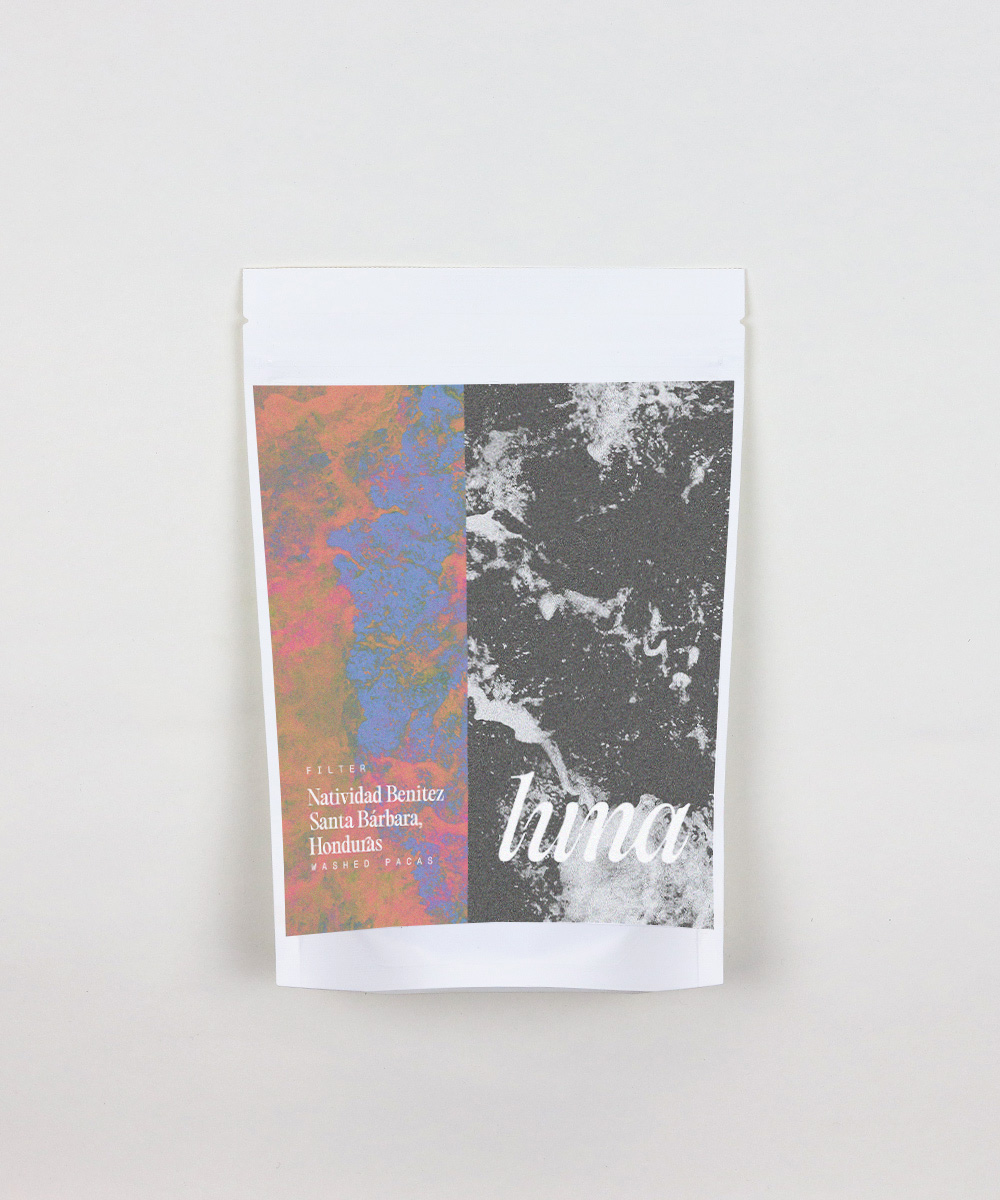
Natividad Benitez (Pacas) | Santa Barbara, Honduras
US$66.00
Producer: Natividad Benitez
Farm: El Ocotillo
Where: Santa Bárbara, Honduras
Variety: Pacas
Processing: Washed using concrete tanks
Exporter: Beneficio San Vicente
Harvest: June 2025
Tasting notes: pear, rooibos, date, molasses, nougat
Sourced from dear friends at Beneficio San Vicente, this Pacas lot was picked and processed by Natividad Benitez on his farm El Ocotillo in Cielito. Fermented as a traditional washed process using concrete tanks for 24 hrs, then washed and dried, resulting in a clean, crisp profile with pear-like acidity, rooibos, and a date molasses finish.
About Natividad
When thinking about top coffees, Santa Bárbara is part of the ‘best of’ list on many people’s minds. It’s almost not believable that this wasn’t always the case.
Back in the 90’s, the closest dry mill (Beneficio San Vicente or BSV) regularly received wet parchment coffee from various families, and due to the state it was received in, not picked ripe or processed well at all (often not dried), its fate was to be sold in the local market all blended and dried in towering mechanical driers. Drying your own parchment as a producer wasn’t really done at that time.
It wasn’t until 2004, when Benjamin and Arturo of San Vicente mill in Peña Blanca made a decision that would create a paradigm shift for the whole region. They bought a delivery from Natividad Benitez, cupped it, then entered it into 2005’s Honduras 2nd annual cup of excellence competition. Before this, Don Nati wasn’t producing specialty and only a tiny portion of his land was devoted to coffee. I’m honestly not sure if Natividad knew about his coffee being entered initially – I don’t think he did! If you’ve not heard of Cup of Excellence, it’s a coffee competition for producers in various countries. Farmers will pick their top lot to be evaluated by an in-country jury, then an international group of cuppers. This process ends with each coffee ranked and an auction where coffees can reach life-changing prices. Producers essentially become famous amongst roasters and green buyers.
The day when Natividad’s lot took an astonishing 1st place marked a shift for the people of Santa Bárbara – That moment kicked off a new reputation as coffee producers that rival the worlds brightest. People felt supported in their work over the subsequent years, and the shift in the community (financially especially) was palpable. A huge part of why this worked so well is because Benjamin is an incredible facilitator. He’s got help now thankfully, but initially the 280-some producers were all swirling in his head somehow, and roasters through the 2010’s until today have been able to develop stable buying relationships that last, in large part thanks to Benjamin’s tireless efforts.
Processing
The typical method of processing in Santa Bárbara goes a little something like this:
First the coffee fruit is floated to rinse off any dirt and remove any that float (if they float it means either there’s no coffee seed inside the parchment layer of the fruit, or there’s a lack of nutrient density). Then the fruit goes through a de-pulper, landing in a concrete or ceramic tank (José Angel’s is concrete). The fruit rests in a pile to ferment without water overnight. In the mid morning the coffee seeds are checked and if the mucilage is sufficiently metabolized and no longer sticky, then water is introduced to the tank to wash the parchment. Once that’s done, the coffee is moved to raised solar dryers to dry over a 1-2 week period, allowing for the moisture come down slowly to around 10-11%. The dried parchment is put in nylon bags and is delivered to the dry mill, where it will be stored until it’s pretty close to export time. The idea is to mill as close to the shipment time as possible to maximize shelf life of the resulting green coffee.
About Pacas
Pacas is a natural mutation from Bourbon where it grows smaller and more compact allowing harvesting to be a little easier and planting to be closer together than would be possible with Bourbon, much like the Caturra variety grown widely in Colombia. Introduced to Honduran coffee farmers by IHCAFE in 1974, the variety was first discovered on a farm in the Santa Ana region of El Salvador, owned by the Pacas family, in 1949.